
03.06.26
Why Climbing is the Ultimate Workout for Physical and Cognitive Health
Climbing is one of those activities that doesn’t feel like traditional exercise, but that’s exactly why it’s so effective.
At its core, climbing is a full-body workout where you’re constantly lifting your own body weight, solving movement problems and adapting as you go. It combines strength training, coordination, balance and decision-making in a way that’s hard to replicate in most other forms of exercise.
That combination is what makes it interesting from both a physical health and cognitive health perspective.
Why climbing works your body differently
From a strength point of view, climbing naturally overlaps with resistance training. Every time you move up a wall, you’re using your grip, back, shoulders, arms, core and legs together. Unlike isolated gym exercises, climbing asks your body to work as a connected system. Over time, this builds:
- grip strength
- upper and lower body strength
- core stability
- balance and coordination
It also does something simple but important: it trains you to control your own body weight in space. A recent BBC article explored how resistance training may be linked with improved long-term health outcomes, including longevity: Read BBC News article. Climbing sits very naturally within that same category of movement, even if it doesn’t look like a typical weights session.
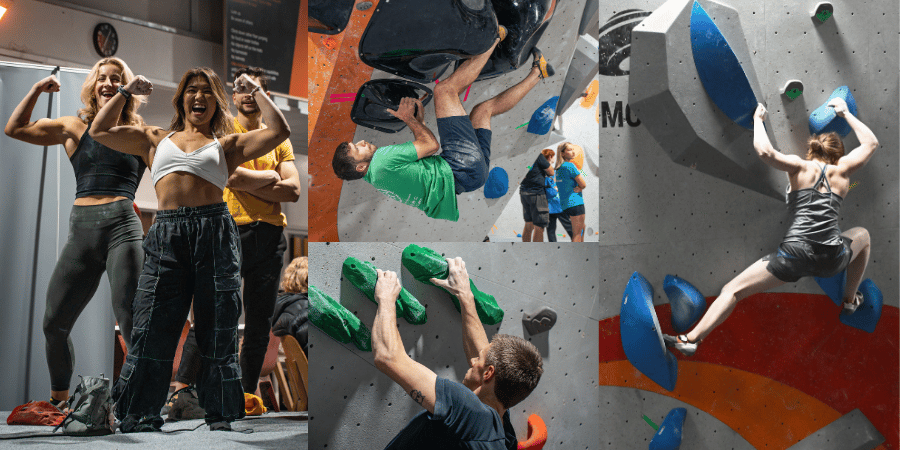
The cognitive side of climbing
Climbing isn’t just physical effort. It’s also continuous problem-solving. Every route asks you to:
- plan your next move
- judge distance and balance
- adapt when something doesn’t work
- stay calm under effort
That mix of physical demand and decision-making is what gives climbing its cognitive load. You’re not just repeating movements, you’re thinking your way up the wall. Over time, that can help build focus, confidence in problem-solving and the ability to stay composed when things feel challenging.
Why it doesn’t feel like “working out”
One of the reasons people stick with climbing is that it doesn’t feel like a traditional workout session. There are no strict sets or reps. You’re not watching a timer. You’re just trying, resting, laughing, adjusting and trying again.
It feels more like an activity you experience than an exercise you complete. That shift in mindset is often what makes it more sustainable long term.
“Fun work out, going to gym is boring but climbing gives more dynamic muscle growth and flexibility while having fun” TCA climber feedback
Climbing vs the gym – it doesn’t have to be either
Climbing and gym training aren’t in competition with each other. They actually complement each other quite well. Climbing builds functional, full-body strength and coordination. Traditional weights training can help isolate and strengthen specific muscle groups.
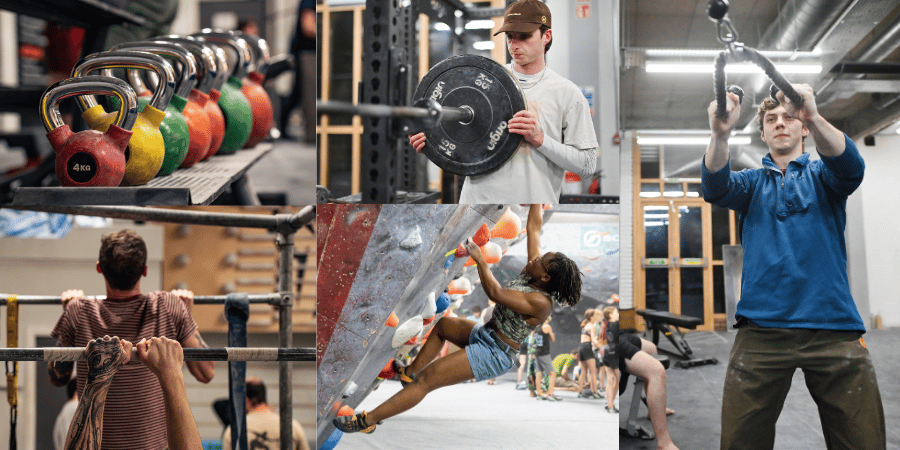
At most of our centres, we also have free weights and machines available if you want to support your climbing or just mix up how you train. We have full gyms at The Mothership in Bristol and The Prop Store in Glasgow, with free weights and training areas in other centres. A pass gives you unlimited access to all facilities.
What people tend to notice first
It builds gradually, almost without you realising. Most people don’t notice fitness changes in a dramatic way. It’s usually small things at first:
- your grip feels stronger
- movements feel more controlled
- you trust your feet more
- problems that felt impossible start to feel manageable
Frequently asked questions
- Is climbing good for fitness?
Yes. Climbing is a full-body activity that builds strength, endurance, balance and coordination. - Does climbing count as strength/resistance training? Largely, yes. You’re lifting your own body weight on every move, which builds real strength through your grip, arms, back, core and legs. It’s not only strength work though, there’s plenty of balance and problem-solving too.
- Does climbing improve mental health or focus?
Many people find climbing helps with focus and stress because it requires attention and problem-solving in the moment. It’s a very mindful activity, as often you are only focused on your next move. - Is climbing better than going to the gym?
We’d say yes, although they train different things. Climbing is more of an all-rounder giving a full body workout. It’s dynamic and skill-based, while gym training is generally more targeted to certain muscles. - Can climbing replace strength training?
It can cover a lot of strength training needs, especially for general fitness, but many people combine it with weights for best results. - Where is TCA?
We have 2 centres in Glasgow, 2 in Bristol and 1 in Chippenham. - How do I start?
You can start bouldering anytime without booking or doing a course or you can get a personalised intro with our Bouldering Inductions for just £15. You can also book a climbing taster. Check out all of our options for beginners to:
Final thought
Most people don’t need a perfect training plan. They just need something that keeps them moving, thinking and feeling motivated to come back. The best kind of exercise is usually the one that doesn’t feel like a chore. If you don’t believe us, here’s a small sample of the comments we received in our last annual survey of TCA customers:
“It’s the only form of exercise I’ve found that works as well on the mind as it does on the body.”
“I bring my daughter as it’s good for her fitness and strengthen her muscles because she has joint hypermobility.”
“It really helps my mental health, helps me connect with friends while doing something or do some mindfulness while climbing. I really love it there!”
“Climbing is fun and it helps keep me fit, mobile and strong as I’m getting older.”